From Reactive Chaos to Strategic Control: How Leon County Sheriff’s Office Transformed Fleet Preventive Maintenance
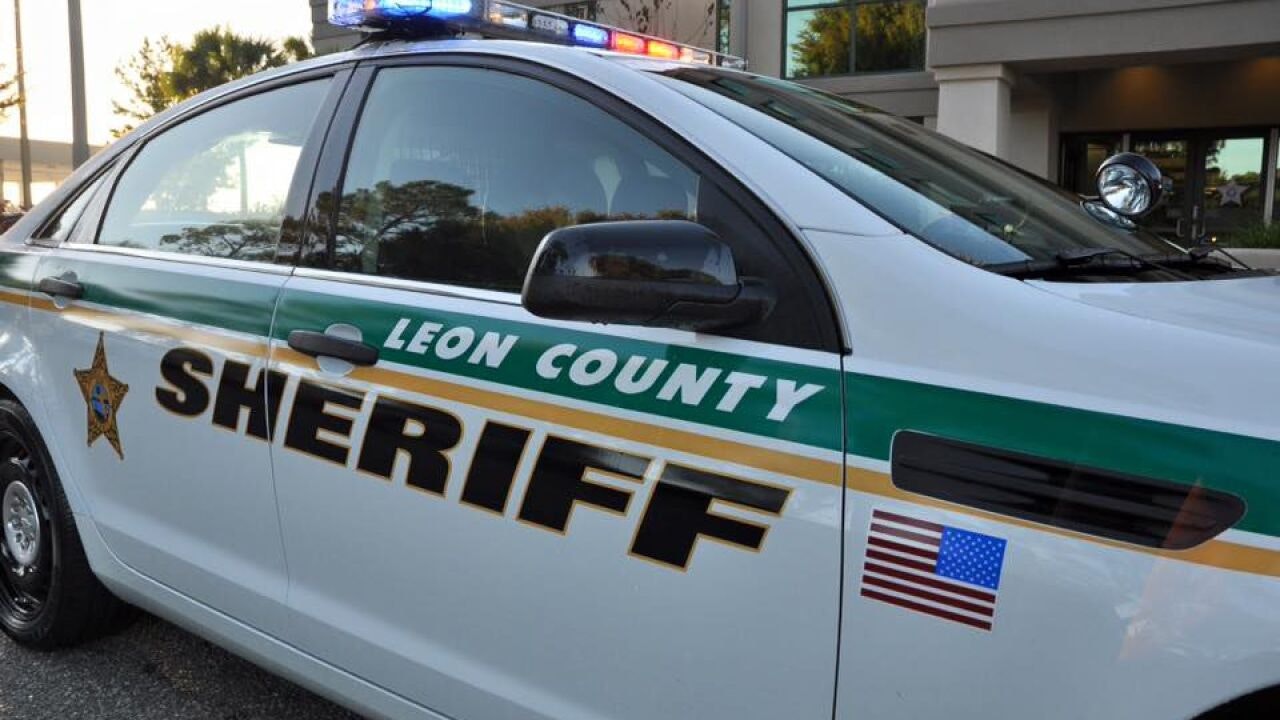
How Leon County Sheriff’s Office Built a NAFA Top-20 Fleet with Preventive Maintenance Software
A downed patrol vehicle is not just a fleet problem — it is a public safety gap. For the Leon County Sheriff’s Office (LCSO) in Tallahassee, Florida, that reality drove everything. When Tim Coxwell took over as fleet director in 2013, he inherited 436 vehicles, two technicians — neither of them certified — and eight service bays that had been converted into storage space for property, evidence, and radio equipment. By 2026, that same operation had grown to 593 assets, a $2.2 million capital outlay, a $3 million operating budget, and roughly 1,600 work orders per year. LCSO now ranks among the top 20 fleets in the country. The difference was data.
“A down patrol vehicle is not a fleet problem. It’s a public safety issue. Uptime availability is just non-negotiable.”
— Tim Coxwell, Fleet Director, Leon County Sheriff’s Office
The results of staying reactive are predictable: emergency repairs, crisis-driven replacement decisions, and budget conversations built on gut instinct rather than hard numbers. According to the U.S. Department of Energy’s Operations & Maintenance Guide, agencies with structured fleet preventive maintenance software programs save an estimated 12–18% in costs compared to those relying on reactive fixes. LCSO was leaving money on the table — and taxpayer trust along with it.
What happened next became one of the most compelling government fleet management transformations in the country — and a practical roadmap for any public agency fleet struggling with the same challenges.
Why 24/7 Public Safety Fleets Cannot Afford to Stay Reactive
Public agency fleets operate under pressures that private fleets rarely face. Budget cycles are public record. Taxpayers expect accountability. And in law enforcement, a vehicle out of service is not an inconvenience — it is a coverage gap that puts communities at risk. For LCSO, three converging pressures made staying reactive untenable:
- Property tax and legislative pressure: Budget requests without supporting data get cut. Agencies need defensible capital plans, not anecdotes. LCSO leadership regularly asked hard questions the fleet team struggled to answer quickly.
- Zero downtime tolerance: A Tahoe PPV sidelined for an emergency repair is not just a cost — it is a patrol car absent from the road. For a 24/7 operation, uptime is a public safety metric, not just an operational one.
- Rising vehicle complexity and cost: Modern law enforcement fleet management means dealing with vehicles that require specialized upfitting, advanced electronics, and longer procurement lead times. When Tim started, a patrol-ready Crown Victoria cost $18,000 plus $10,000 in upfit. By 2021, a Tahoe PPV had risen to $33,000. By 2025, that same asset hit $53,000 — a 48% increase in three fiscal years — before a $25,000 upfit. Planning decisions made on outdated data carry massive financial consequences.
“That same $33,000 asset is now $53,000. That’s a 48% increase across three fiscal years. And this time we had the data to react to it successfully.”
— Tim Coxwell, Fleet Director, Leon County Sheriff’s Office
According to Fleet Maintenance Magazine, vehicle downtime costs public agencies an average of $448 to $760 per vehicle per day. Emergency roadside repairs add another $350–$700 per incident, and emergency vehicle rentals can approach $3,000 per month. The Federal Motor Carrier Safety Administration has also documented that carriers with ongoing maintenance violations have 65% higher future crash rates — proof that deferred maintenance is never just a financial risk. It is a safety risk.
For Tim Coxwell, the turning point came when he recognized that the fleet operation’s biggest obstacle was not underfunding — it was the absence of reliable data to make the case for proper funding.
The Starting Point: Flying Blind Without Fleet Asset Management Data
Before LCSO implemented FASTER’s Fleet Maintenance Management software, Tim’s technicians tracked service records by hand, writing asset numbers, mileage, and work order numbers into notepads at the end of every shift. It was a system that worked until it didn’t. The real cost of that approach was invisible in the day-to-day, but devastating in the aggregate:
“There’s no way I can go to command staff with these notebooks and say, ‘Hey, I need five technicians. I need six technicians.’”
— Tim Coxwell, Fleet Director, Leon County Sheriff’s Office
- No data to defend the fleet budget: Conversations with leadership relied on anecdotes and gut instinct, not verifiable cost-per-mile metrics or lifecycle cost data.
- Reactive vehicle replacement decisions: Without a formal vehicle lifecycle management system, assets were replaced when they failed — not when data indicated they were approaching the end of their cost-effective service life.
- No visibility into shop productivity or asset uptime: Managers had no reliable way to measure technician efficiency, track work order completion rates, or identify which vehicles were consuming disproportionate maintenance hours.
- Unpredictable costs eroding budget credibility: Year-over-year fluctuations in actual versus budgeted spending made it difficult to secure consistent capital funding from the Board of County Commissioners.
A 2007 Fleet Management Program Review confirmed the problem’s depth. LCSO’s implied average replacement cycle was 8.2 years — 17% older than the recommended 7-year benchmark. Consultants recommended a formal replacement plan funded at $1.3 million annually to replace 53 vehicles per year. Instead, actual replacement spending in FY2015 was $3,940.
That gap between what was needed and what was funded was not a budgeting failure. It was a data failure. Without fleet management information system (FMIS) data to back up capital requests, fleet managers are left asking for what they need and hoping decision-makers say yes.
“Initially I was not happy with my software — and it turned out I was really not happy with how we as users were using our software. We weren’t completely filling out the information within all of the modules to get accurate reporting.”
— Tim Coxwell, Fleet Director, Leon County Sheriff’s Office
The Solution: FASTER’s Fleet Management Information System (FMIS)
LCSO’s transformation began with the implementation of FASTER Asset Solutions’ fleet management software — a purpose-built Fleet Management Information System (FMIS) designed specifically for public sector organizations. Unlike ERP platforms adapted for fleet use, FASTER is built from the ground up to match how government fleets actually operate. The implementation delivered five interconnected capabilities that powered LCSO’s turnaround:
1. Preventive Maintenance Scheduling & Work Order Management
FASTER’s Fleet Maintenance Management module auto-generates preventive maintenance schedules based on mileage, engine hours, or calendar triggers — and tracks PM completion, overdue services, and technician labor in a single dashboard. For LCSO, this meant patrol vehicles were serviced on schedule rather than when something failed. The Commercial Vehicle Safety Alliance’s 2024 International Roadcheck results found that 23% of inspected commercial vehicles were placed out of service for maintenance violations — a risk FASTER’s automated PM workflows help eliminate.
2. Vehicle Lifecycle Management & Asset Replacement Scoring
Using FASTER’s fleet asset management tools and a 15-Point Asset Replacement Scoring System, LCSO now scores every vehicle on age, mileage, maintenance spend, and condition index, automatically surfacing which units need replacement before they become a crisis. Replacement decisions shifted from crisis-driven guesswork to data-backed lifecycle planning. Notably, Tim initiates replacement write-ups at 12 points rather than the 15-point threshold, accounting for the time it takes to move through the budget process and procurement cycle before a vehicle’s condition deteriorates further.
“We have to make our decisions rooted in one metric: the life cycle cost per mile. When depreciation and rising costs start to intersect, we want that vehicle ordered — before it really starts to cost us money.”
— Tim Coxwell, Fleet Director, Leon County Sheriff’s Office
3. TCO Reporting & Fleet Budget Forecasting
The TCO and Reporting Analytics platform gives LCSO instant access to total cost of ownership by vehicle, department, or fleet — including cost-per-mile, downtime attribution, and utilization rates. According to the American Transportation Research Institute, fleet maintenance costs average $0.202 per mile and represent roughly 8.9% of total operating expenses. Being able to show this data by asset type gives leadership the financial lens they need to approve capital requests.
LCSO’s budget defensibility transformed as a result: replacement funding grew from $420,500 in FY2017 to $1,754,162 budgeted in FY2024.
4. Digital Inspections & Compliance Tracking
FASTER Inspector provides digital pre-trip, post-trip, driver swap, and safety inspection workflows, replacing paper-based processes with a searchable, auditable compliance record. Under 49 CFR Part 396, all regulated fleet vehicles must undergo systematic inspection, repair, and maintenance with documented recordkeeping. FASTER Inspector turns that regulatory requirement into a daily operational asset.
5. Telematics Integration & Fuel Management
LCSO’s KPI dashboard tracks fuel consumption across the fleet through FASTER’s telematics integration and fuel management software, consolidating GPS data, vehicle diagnostics, and fuel costs in one platform.
The U.S. Department of Energy’s Alternative Fuels Data Center estimates that proper maintenance and monitoring can improve fleet fuel efficiency by roughly 10% on average — and that every 1 psi drop in tire pressure reduces fuel economy by 0.2–0.3%. When telematics and maintenance data feed into a single system, those savings become visible and recoverable.
6. VEU Analysis & Technician Staffing Justification
One of the most underutilized capabilities of a well-deployed FMIS is its ability to justify staffing levels with data. LCSO used NAFA’s Vehicle Equivalent Unit (VEU) analysis — built directly from FASTER’s work order and labor data — to calculate exactly how many technician hours the fleet demands. The results translated into a staffing roadmap: when LCSO’s fleet average age was under 4 years, the data supported 7 technicians.
Today, with the average age climbing to 4.81 years and the fleet approaching the 5–6 year range where maintenance burden accelerates, Tim is hiring 2 additional technicians, a decision backed by a staffing plan written in 2018 and updated year over year. The data, not a gut feeling, made that budget request possible.

The Three-Phase Transformation: From Anecdotes to Board-Ready Data
Tim Coxwell’s transformation was not a single event, it was a disciplined, phased evolution that changed how LCSO talked to leadership, justified spending, and planned for the future.
Phase 1: Financial Discipline — Establishing Cost Visibility
The foundation was accurate data. Using FASTER’s FMIS, Tim’s team established true lifecycle cost and cost-per-mile tracking for every asset. Budget conversations shifted from “we need more funding” to “here is what each vehicle has cost over its service life, and here is what replacement will cost by fiscal year.”
That same data also drove a physical transformation of the shop floor. By analyzing technician workstation records to understand how long PMs were taking and where time was being lost — walking to retrieve parts, waiting on rack availability, searching for tools — Tim redesigned the shop layout to minimize steps. PM parts are now staged immediately in front of the workbench, next to the lift controls and tooling.
The result: a meaningful reduction in PM cycle time, improved technician throughput, and a shop where 90% of needed parts are already on hand when a vehicle arrives. That outcome came directly from reading the data, not from guessing.
Phase 2: Operational Visibility — Shop Productivity & Uptime Metrics
With financial data in place, the team turned to shop performance. Tracking technician productivity, PM completion rates, and asset uptime through FASTER’s fleet maintenance management workflows revealed exactly where the operation was strong and where gaps existed.
LCSO’s 2025 Fleet KPI Summary (now generated automatically) shows fleet availability at 97–99% against a 95% goal; downtime at 1–3% against a 5% ceiling; and technician productivity at 89–118% across the year. These are the measurable outputs of a team managing by data instead of instinct.
The FASTER reports that drive this visibility — and that Tim uses to compile NAFA’s 100 Best Fleets submission and internal leadership reporting — include: W343 (service requests received), W350 (work orders opened and completed), W328 (repairs completed), W332 (fleet downtime percentage), W330 (technician productivity — direct and indirect labor), W309/W309s (repair completion time windows), W314 (comeback repairs), W516 (vendor invoices), and W113 (vehicle miles traveled by class and month). Together, these reports tell the complete story of fleet operations — in a format that command staff can read and act on.
Phase 3: Executive Reporting — Board-Ready Fleet Budget Forecasting
The final phase brought it all together. Command staff now receives board-ready fleet reports that give them the clarity to make informed decisions and advocate confidently for fleet funding. The fleet team is no longer a cost center asking for money — it is a public safety function making data-backed requests. That cultural shift is, perhaps, the most important outcome of all.
“Your reporting is all that’s left of you after you leave a meeting. The executive team decides whether to support your budget based on the quality of the report you produce — and that quality comes from the information you collect in your fleet management information system.”
— Tim Coxwell, Fleet Director, Leon County Sheriff’s Office
The implementation itself followed four structured steps:
- Buy-In First: Command staff and IT engaged early. Leadership support from day one — not as an afterthought — was critical to maintaining momentum.
- Stakeholder Input: Wants versus needs were gathered through surveys and driver training sessions. A structured alignment process resulted in minimal pushback from staff.
- Data-Driven Vendor Evaluation: LCSO used NAFA’s Vehicle Equivalent Unit (VEU) Analysis to compare maintenance burden across vendors in a standardized way. Customer service quality proved to be the deciding differentiator.
- Full Transparency at Go-Live: Self-service data access was extended to all departments, and full data transparency became a cultural norm — not just an IT initiative.

Measurable Results: The ROI of Government Fleet Preventive Maintenance Software
The outcomes of LCSO’s transformation are documented, verifiable, and directly tied to public safety readiness and fiscal accountability.
Fleet Budget Defensibility — Including an Emerging Legislative Threat
Every capital request is now backed by real data. Replacement funding grew from $420,500 budgeted in FY2017 to $1,754,162 budgeted in FY2024, with actual spending reaching $2,460,612 as LCSO addressed years of deferred replacement. Tim’s strategy was consistent: state the full need in every budget cycle, even when the full ask wasn’t granted. At fiscal year-end, unspent funds across the county were regularly redirected to additional vehicle purchases — a strategy that only works when the documentation is already in place.
The stakes have now risen further. Florida is among the states actively considering eliminating property taxes — the primary funding source for LCSO’s replacement and operating budgets. If that change occurs, fleet will no longer just be competing for capital on an annual basis. It will be competing for survival against every other department in the agency. In that environment, a fleet that can produce data-backed replacement plans, cost-per-mile benchmarks, and predictive maintenance projections has a fundamentally stronger position than one that cannot. Data is no longer just useful — it is the only defense.
Fleet Advantage research confirms that fleets with strong PM compliance experience approximately 20% fewer downtime days than those managing reactively — a figure LCSO’s KPI data validates month over month.
Vehicle Lifecycle Planning & Replacement Forecasting
LCSO has mapped out replacement needs through FY2029, identifying exact vehicle models, quantities, base costs, upfit costs, and total extended costs per unit. That plan now includes a full electric vehicle transition: Tesla Model Y units for patrol, administrative, and detective roles; EV Silverados for warrants and crime scene; and Level 2 and Level 3 charging infrastructure across the fleet. None of that planning would be possible without the FMIS cost-per-mile and lifecycle data underpinning every line item. FASTER’s fleet management software supports mixed ICE/EV fleets with normalized cost tracking and flexible PM trigger configurations for electric drivetrains — so the same data foundation that justified patrol car replacements in 2019 now supports EV procurement decisions through 2029.
Reduced Reactivity & PM Compliance
Proactive preventive maintenance scheduling through FASTER has cut unplanned downtime and emergency repair costs. LCSO targets a 98% fleet availability rate — and routinely achieves it. The philosophy is simple: if a vehicle is going to spend 5 hours in a PM bay covering all scheduled services, emergency equipment updates, and consumables, it should not come back for anything that could have been caught during that visit.
“I don’t want to see a tow bill. If there’s a tow bill, it better be for a flat tire — not a battery, a water pump, or anything we could have handled within a PM.”
— Tim Coxwell, Fleet Director, Leon County Sheriff’s Office
Fleet Advantage research confirms that fleets with strong PM compliance experience approximately 20% fewer downtime days than those managing reactively — a figure LCSO’s KPI data validates month over month.
Parts Inventory & Work Order Efficiency
Through FASTER’s integrated parts inventory management and work order tracking, LCSO’s shop now achieves repair completion within 24–48 hours on 60–70% of work orders. Today, 90% of the parts needed for a given repair are already on hand. PM parts are immediately available at the workbench, next to the lift controls and tooling — a layout designed intentionally by analyzing technician time data to minimize steps and reduce PM cycle time. Automated reporting saves the team an estimated 10–15 hours per week previously spent on manual data compilation.
“The sooner you get clean data, the sooner you get better reporting — more funding, more technicians, and your fleet’s overall performance in age health, PM completion, and asset availability. It all comes along with it.”
— Tim Coxwell, Fleet Director, Leon County Sheriff’s Office
National Recognition
The results have spoken for themselves well beyond LCSO’s budget meetings:
- NAFA 100 Best Fleets: #51 in 2023, #16 in 2024, #18 in 2025
- Government Fleet 50 Leading Fleets: Three consecutive years — 2023, 2024, 2025
- Police Fleet Innovators Award — 2025
- ASE Blue Seal of Excellence — Recognized Business
- CAFM Designation — Tim Coxwell, Certified Automotive Fleet Manager
What makes this possible at scale is that FASTER is purpose-built for public sector fleet operations — not adapted from an ERP or a commercial logistics platform. The full platform covers the complete asset lifecycle from acquisition to retirement, including preventive maintenance and work orders, parts inventory, fuel management, telematics integration, TCO analytics, and motor pool management for agencies that share vehicles across departments. Every module feeds the same data architecture — no silos, no manual reconciliation, no tool sprawl. Agencies managing shared vehicle pools alongside dedicated fleet assets can track reservations, utilization, and cost attribution in the same system that runs their PM schedules and replacement forecasts.

Frequently Asked Questions: Fleet Preventive Maintenance Software for Government Fleets
What is fleet preventive maintenance software and why do public agencies need it?
Fleet preventive maintenance software is a digital platform that automates the scheduling, tracking, and documentation of routine vehicle maintenance based on mileage, time, or engine-hour triggers. For public agencies, it replaces reactive “fix it when it breaks” approaches with structured PM programs that reduce unplanned downtime, extend asset life, and generate the audit-ready records needed to defend budget requests. According to the U.S. Department of Energy, organizations with strong PM programs save 12–18% compared to reactive operations. For LCSO, that shift from reactive to proactive was the single most important factor in achieving 97%+ fleet availability.
How does FASTER’s fleet management software differ from generic CMMS platforms?
Generic Computerized Maintenance Management Systems (CMMS) are designed for facilities and equipment broadly — not for the specific workflows of government fleet operations. FASTER’s Fleet Management Information System (FMIS) is purpose-built for fleet professionals, with features like VEU (Vehicle Equivalent Unit) analysis for staffing justification, vehicle lifecycle scoring for replacement planning, integrated fuel card data, motor pool reservations, mobile inspection workflows, and telematics integration — all in a single platform. FASTER has been serving public sector fleets specifically since 1982, and that specialized focus shows in both the product depth and the implementation track record.
How do we justify a fleet management software investment to elected officials?
The most effective approach is showing the cost of not having the software. Vehicle downtime costs $448–$760 per vehicle per day. Emergency repairs average $350–$700 per incident. Deferred vehicle replacement dramatically inflates per-mile costs. FASTER’s TCO and reporting analytics platform makes those costs visible and attributable — by vehicle, department, and fiscal year.
Beyond the data itself, the strategy matters. LCSO’s approach was to state the full replacement need in every budget cycle — even in years when the full ask wasn’t granted. That documentation kept the need on record. At fiscal year-end, when unspent county funds became available, LCSO already had the justification ready to redirect those dollars to vehicle purchases. That strategy — consistent storytelling backed by defensible data — is what built credibility with leadership over time. The first cycle, they may not give you what you want. By the second and third cycle, trust builds. Your data makes the case so you don’t have to.
What compliance requirements apply to public sector fleet maintenance programs?
Under 49 CFR Part 396, all regulated commercial fleet vehicles must undergo systematic inspection, repair, and maintenance with detailed recordkeeping and annual inspections. The CVSA’s 2024 International Roadcheck found that 23% of inspected commercial vehicles were placed out of service for maintenance violations — including 25% for brake defects and 21% for tire issues. FASTER Inspector provides digital inspection workflows, automated checklists, and searchable audit records that turn compliance from a paperwork burden into a daily operational asset.
How do you determine when to replace a fleet vehicle versus continue repairing it?
The most defensible approach is a data-driven replacement scoring system built on age, mileage, total maintenance spend, and condition index — not just calendar-based policy. FASTER’s vehicle lifecycle management tools implement exactly this methodology. LCSO’s 15-Point Asset Replacement Scoring System automatically scores every vehicle as data is collected, surfacing replacement candidates before they become costly liabilities.
One important nuance from practice: Tim writes vehicles up for replacement at 12 points, not 15. By the time a replacement clears the budget process and reaches a purchase order, a vehicle that scored 12 in February may score 14 by August. Building that lead time into the trigger prevents the all-too-common scenario of approving a replacement for a vehicle that has already become a breakdown liability. Policy-based replacement schedules — replace at 7 years or 100,000 miles regardless — miss vehicles that are costing too much at 3 years and overlook assets that are still cost-effective at 9. The lifecycle cost per mile is the only metric that tells the true story.
Can FASTER’s software support electric vehicle (EV) fleet transition planning?
Yes. EV maintenance differs from ICE — less powertrain PM, more focus on tires, thermal management, software recalls, and charger uptime. FASTER’s fleet management software handles mixed ICE/EV fleets with normalized cost-per-mile tracking and flexible PM trigger configurations for electric drivetrains. As shown in LCSO’s own FY26–FY29 capital plan, FASTER provides the lifecycle data foundation needed to make EV procurement decisions that are specific, fundable, and defensible to leadership.
How quickly can we expect results after implementing FASTER?
Most agencies see measurable improvements within the first 90 days, particularly in PM compliance rates, reporting efficiency, and reduction in administrative hours. FASTER’s FASTER FX mobile app puts work order management and inspection tools directly in technicians’ hands from day one. But the most important action for any new FMIS user is this: run every report in the system and see what doesn’t work. If a report produces empty or incomplete data, that is a diagnostic — it means a data field isn’t being filled out. Call your implementation team, find out what drives that report, and fix the input. The sooner the data is clean, the sooner the reporting becomes actionable. Longer-term outcomes — reduced downtime, defensible budgets, and data-backed replacement plans — typically solidify over the first 6–12 months as the historical baseline grows.
We just went live with an FMIS and have no historical maintenance data. How do we start justifying replacements?
This is one of the most common challenges for agencies transitioning from paper-based or minimal tracking systems. The answer is to start with what you do have: the asset tab. Make sure acquisition date, in-service date, useful life in months, replacement meter, inflation rate, and salvage rate are all correctly entered for every vehicle. With accurate age and mileage, a five-point replacement scoring system — age and meter alone — gives you a usable starting point, even without full maintenance cost history. As PMs are performed and work orders are completed over the next 6–12 months, the cost data accumulates and the scoring becomes more precise. Importantly: make sure the in-service date reflects when the vehicle actually entered service, not when it was entered into the system. That single field determines how accurately the system calculates remaining useful life. Get that right first, and build from there.
Ready to Make the Same Shift?
The Leon County Sheriff’s Office went from handwritten ledger sheets and a $3,940 replacement budget to a NAFA Top-20 nationally recognized fleet operation. The technology made it possible — but it was the data that changed the conversation with leadership, secured the funding, and ultimately improved public safety outcomes.
Tim’s advice for fleet leaders ready to start: Audit one pain point. Unplanned repairs? Budget pushback? Replacement guesswork? Start there. Reframe fleet to leadership — you are not a cost center, you are a public safety function. And get the data to prove it.
FASTER Asset Solutions has been purpose-built for exactly this kind of transformation. With 40+ years serving public sector fleets, 400+ agency clients across municipalities, counties, transit agencies, universities, and utilities, and over 1 million assets managed nationwide, FASTER brings the tools, the implementation expertise, and the public sector track record to help your operation make the same shift — from reactive chaos to strategic control.
Join hundreds of public sector fleets that have reduced downtime by up to 20%, saved 15+ hours per week in administrative work, and built the data infrastructure to defend every dollar they spend.