
The Fleet Director Who Won NAFA's 2026 "Professional Of The Year" And The System Behind Him
Tim Coxwell Runs a Top-20 NAFA Fleet and Just Received NAFA's 2026 "Fleet Professional Of The Year" Award.
Watch Tim walk through the exact system he used to turn around a failing operation — and how he built the data foundation to justify staffing, secure budget approvals, and earn national recognition.
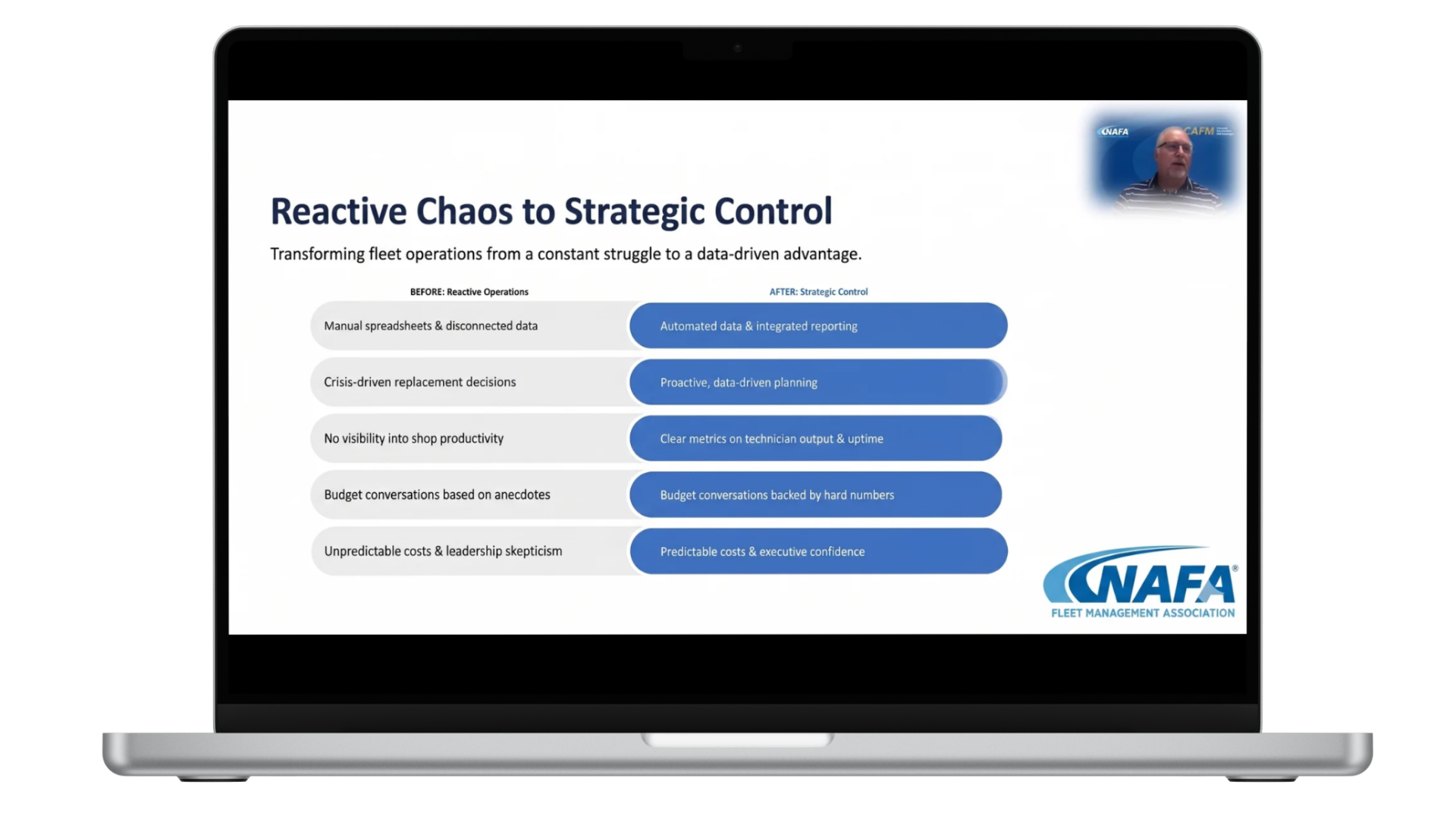
Instant Access:
Tim Coxwell inherited 436 vehicles, two uncertified technicians, and service bays converted into storage sheds.
Today Leon County Sheriff's Office:
- Manages 593 assets
- Holds a 97–99% fleet availability rate
- Ranks #18 on NAFA's 100 Best Fleets list.
Tim explains the transformation and how to apply the same framework to your fleet operation.
On-Demand NAFA Sponsored Webinar
"Your reporting is all that's left of you after you leave a meeting. The quality of that report comes from the information you collect in your fleet management information system."
— Tim Coxwell, Fleet Director, Leon County Sheriff's Office
What You'll Learn

Why reactive maintenance is a budget credibility problem, not just an ops problem
A downed patrol vehicle is a public safety gap. Tim walks through why anecdote-based budget requests get cut — and what defensible capital plans actually require.
The 15-Point Asset Replacement Scoring System — in practice
How LCSO scores every vehicle on age, mileage, maintenance spend, and condition to surface replacements before they become crises. Including why Tim writes vehicles up at 12 points, not 15.
How to turn FMIS data into board-ready budget requests
The specific FASTER reports LCSO uses to justify replacement funding, technician headcount, and capital outlay — and how to present them to command staff.
Using VEU analysis to justify staffing decisions with data
NAFA's Vehicle Equivalent Unit analysis — built from FASTER's work order data — produced a staffing roadmap that Tim wrote in 2018 and has updated every year since.
Lifecycle cost planning through FY2029 — including EV transition
How LCSO extended its replacement forecast to 2040 and built a multi-year EV capital plan with specific vehicle models, unit costs, upfit costs, and charging infrastructure — all sourced from the FMIS.
Presenters
Tim Coxwell, CAFM
Fleet Director, Leon County Sheriff's Office
Mike Brawley
VP of Business Development, FASTER Asset Solutions