Best Government Fleet Management Software: 10 Platforms for Public Agencies
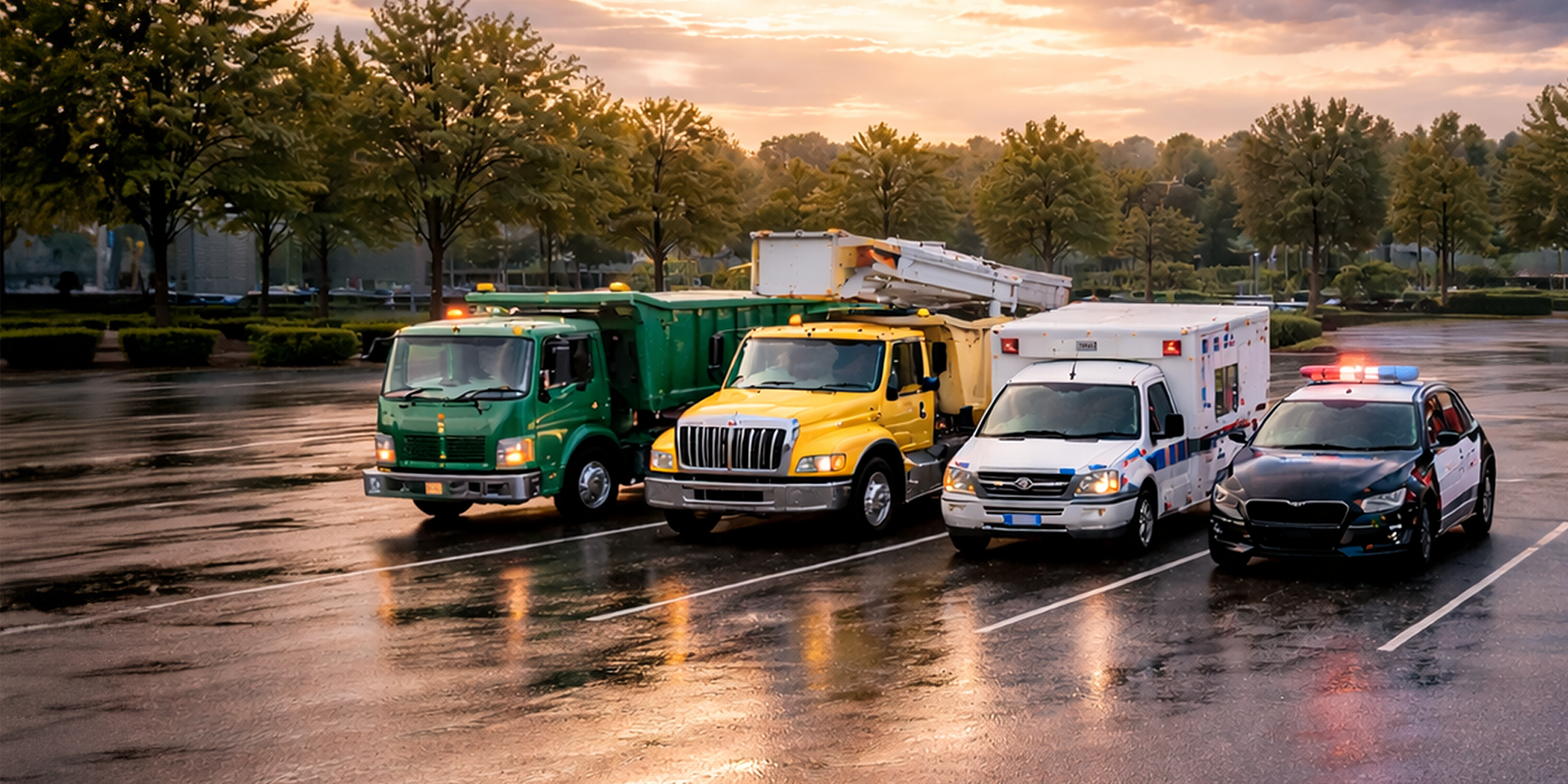
Government fleets carry a different kind of responsibility. Whether vehicles support public works, transit, utilities, emergency response, parks, or administrative services, their availability affects the community directly.
That is why choosing government fleet management software involves more than finding a GPS map or a maintenance calendar. Public agencies need dependable records, practical reporting, multi-department visibility, and a clear picture of the cost and condition of every vehicle and piece of equipment.
The first decision is what problem the agency needs the platform to solve. A fleet management information system, or FMIS, is usually the better starting point when work orders, parts, labor, and replacement planning are the constraint. Telematics and video platforms are better suited to real-time location, utilization, driving behavior, and incident review. Some agencies will need both, connected through integrations rather than forced into one tool.
The platforms below are worth evaluating, but they are not interchangeable. Confirm current functionality, integrations, security requirements, and eligible procurement routes during the buying process.
At-a-Glance Comparison
Platform | Strong fit for | Core focus | Evaluation question |
|---|---|---|---|
FASTER | Maintenance-heavy public fleets | Fleet maintenance, asset lifecycle, reporting | Does the agency need a system of record for shop, parts, and lifecycle decisions? |
AssetWorks FleetFocus | Complex government fleet operations | Fleet and public works asset management | How closely must fleet operations connect with wider enterprise asset management? |
Fleetio | Agencies seeking cloud-based maintenance workflows | Maintenance, inspections, cost tracking | Will it connect cleanly to the agency's fuel, telematics, ERP, and purchasing systems? |
Geotab | Telematics-led fleet programs | Vehicle data, utilization, safety analytics | Does the agency already have an FMIS for work orders and parts? |
Samsara | Connected operations and video safety | Telematics, cameras, asset tracking | Are video access, retention, and privacy policies ready for deployment? |
Verizon Connect | Large fleets needing location and field visibility | GPS tracking, dispatch, reporting | Can it support the agency's dispersed field operations and existing systems? |
Chevin FleetWave | Multi-department public-sector fleets | Fleet, maintenance, compliance, lifecycle | How much configuration and implementation support will the organization need? |
Azuga | Municipal and utility teams focused on accountability | GPS, safety, maintenance planning | Is improved visibility the immediate need, rather than a maintenance-first system? |
GPS Insight | Agencies with field-service and GIS needs | Tracking, cameras, DVIRs, integrations | Which existing field-service, GIS, finance, or maintenance systems must remain in place? |
Lytx | Safety-led public fleets | Video telematics and driver risk management | Will camera data complement an existing FMIS and dispatch process? |
1. FASTER
FASTER is designed for organizations that need to manage the lifecycle of vehicles and equipment from one central system, including work orders, preventive maintenance, parts, labor, costs, and asset history.
For public agencies, it is most relevant when the fleet shop is central to the operation and maintenance history needs to inform budget, replacement, and accountability decisions. Rather than beginning with a map or a driver scorecard, FASTER is intended to give maintenance teams and leadership a shared record of what each asset costs, how it has been maintained, and when replacement decisions are becoming more urgent.
FASTER is most appropriate to evaluate when reactive repairs, disconnected spreadsheets, parts control, or limited lifecycle visibility are the underlying problems. Its fleet maintenance management tools support work order and preventive maintenance workflows, while its parts inventory management capabilities can help agencies connect repair activity to inventory control.
Agencies seeking a telematics- or camera-led solution should also confirm how those tools would integrate with the FMIS, rather than assuming one platform will replace the other.
2. AssetWorks FleetFocus
AssetWorks FleetFocus is a government-focused fleet and enterprise asset management platform for public-sector organizations managing vehicles, heavy equipment, fuel, maintenance operations, and public works assets.
It is particularly relevant where fleet records need to sit alongside broader public works or enterprise asset-management processes. That makes it a different evaluation from a lightweight maintenance workflow or a telematics deployment: the agency should assess whether the additional organizational scope is necessary for its operating model.
Before selecting FleetFocus, evaluate implementation requirements, integrations, and the daily workflows of technicians and supervisors. Its potential value rises when multiple locations or departments need standardized records, but so can the importance of configuration and change management.
3. Fleetio
Fleetio for Government offers a cloud-based approach to fleet maintenance, inspections, fuel tracking, reporting, and lifecycle visibility.
The platform may appeal to agencies that want digital maintenance and inspection workflows without starting from a broader enterprise asset-management program. Maintenance schedules can be organized around dates, mileage, or meter readings, while digital inspections can replace paper records and make recurring defects easier to track.
Cost tracking by vehicle, driver, and department can help connect recurring repairs, fuel spend, or downtime to service delivery. The central evaluation question is integration: public agencies should confirm how Fleetio would connect to telematics, fuel cards, ERP, and purchasing systems, as well as whether its access controls meet internal IT and governance requirements.
4. Geotab
Geotab is a telematics-led platform focused on connected vehicle data, including location, diagnostics, utilization, fuel use, idling, and driving behavior.
For an agency that already has a capable maintenance system, Geotab may address a separate gap: near-real-time insight into how vehicles are being used in the field. That can inform utilization reviews, maintenance triggers, safety programs, route performance, and reporting across mixed vehicle types.
It should be evaluated as a telematics layer or data ecosystem, not automatically as a replacement for a fleet maintenance system. Buyers should define which system owns work orders, parts, asset history, and financial records before deciding how telematics data will flow between platforms.
5. Samsara
Samsara's public-sector platform combines connected operations tools, including GPS tracking, vehicle diagnostics, asset tracking, dash cameras, and safety workflows.
It may be most useful when operational visibility and safety follow-up are immediate priorities. A sanitation operation, utility field crew, or service-vehicle department can use real-time data to understand asset location, use, and safety events across a distributed workforce.
Video telematics can support incident review and driver coaching, but it introduces governance work that should not be treated as a technical afterthought. Agencies should establish policies for access, retention, privacy, and the use of video data before deploying cameras at scale. They should also decide whether Samsara will complement an existing FMIS or become part of a wider connected-operations stack.
6. Verizon Connect
Verizon Connect's government fleet management offering centers on location visibility, fleet tracking, dispatch support, driver behavior, and reporting.
The platform is most relevant to agencies coordinating a dispersed mobile workforce across job sites, departments, or asset types. Live location and route activity can help supervisors locate available vehicles, respond to changing needs, and examine idling, fuel use, or equipment utilization.
This is primarily a field-visibility and telematics evaluation. Public buyers should test compatibility with existing maintenance and financial systems, review implementation and support expectations, and verify that reporting will answer the operational questions their supervisors and leadership teams actually use.
7. Chevin FleetWave
Chevin FleetWave is a fleet management platform positioned for government agencies, supporting fleet data management, compliance, maintenance, lifecycle planning, and reporting across public-sector assets.
It may fit organizations seeking standardized records and configurable workflows across several departments, service areas, or locations. That can be valuable when the organization is replacing paper processes or inconsistent local practices, especially where maintenance records, inspections, and compliance documentation need to stand up to public accountability.
The tradeoff to examine is implementation effort. Agencies should map their current processes, identify which variations are essential, and verify current purchasing options and eligibility rather than assuming a listed government route applies to their procurement.
8. Azuga
Azuga for Public Sector combines GPS tracking, safety tools, equipment management, maintenance scheduling, and reporting for municipalities, utilities, public works teams, and other government operations.
It is a practical option for agencies trying to improve day-to-day accountability through live location, driver behavior reporting, maintenance reminders, and geofencing. Its equipment-tracking capability can also matter for teams responsible for trailers, generators, containers, and smaller field assets.
Azuga is better assessed as a visibility and safety platform with maintenance-planning support than as a substitute for a maintenance-first FMIS. Teams with significant shop, parts, and lifecycle-management requirements should define those needs separately before choosing the primary system of record.
9. GPS Insight
GPS Insight's government fleet management software is geared toward agencies that need vehicle tracking, driver safety tools, digital inspections, camera options, and integrations with other operational systems.
It is worth examining for public fleets that rely on rapid field response. Real-time location, geofencing, vehicle status, and reporting can help coordinate crews and reduce the time spent locating assets across broad service areas.
Its integration emphasis is the key differentiator to test. Agencies using finance, fuel-management, maintenance, GIS, or field-service tools should document the data each system needs to send or receive. A telematics deployment is more useful when it complements those systems cleanly than when it duplicates them.
10. Lytx
Lytx Government Fleet Management is a safety-forward option for agencies where driver risk, incident review, and defensible follow-up are the primary goals.
Its video telematics tools can support review of high-risk driving events, driver coaching, incident investigations, and a more consistent safety program. For public works, transit, utility, and public safety fleets, timely video evidence and a clear record of vehicle activity may also support fair responses to collisions or citizen complaints.
Lytx is best evaluated as part of a broader technology stack. Buyers should decide how camera and event data will be governed and how it will connect with existing dispatch, maintenance, and fleet management systems. A safety platform does not remove the need for a reliable maintenance and asset record.
How to Choose Government Fleet Management Software
The best platform for a public agency is the one that addresses its highest-impact operational gap without creating a new data or implementation problem.
If maintenance backlogs, parts issues, and costly downtime are central concerns, start with an FMIS that supports work orders, preventive maintenance, inventory, labor, and lifecycle reporting. If the immediate problem is field visibility, unsafe driving, or underused vehicles, begin with telematics or video safety. Where both problems exist, define the system of record and integration responsibilities before selecting vendors.
The evaluation should involve more than fleet leadership. Maintenance teams, IT, finance, procurement, risk management, and department users will each surface requirements that affect adoption and value.
A thoughtful evaluation should include:
- Current maintenance, inspection, fuel, and reporting workflows
- Requirements for multi-department access and permissions
- Integration needs for telematics, fuel cards, ERP, GIS, and procurement systems
- Data ownership, security, retention, and audit requirements
- Mobile tools for drivers, technicians, and supervisors
- Implementation support, training, and long-term vendor partnership
- Reporting required for budgeting, replacement planning, and public accountability
Make Fleet Data Useful for the People You Serve
Government fleet management software should do more than collect data. It should help agencies keep mission-critical vehicles available, give staff information they can act on, and support defensible decisions about taxpayer-funded assets.
For organizations whose immediate challenge is maintenance execution, parts control, and lifecycle planning, FASTER fleet management software can provide the central operating record that telematics and safety tools often need to complement. See how one public agency used fleet data to strengthen preventive maintenance and replacement planning in this Leon County Sheriff’s Office case study, then talk with a FASTER fleet software expert to confirm current capabilities and integration requirements for your fleet.