From Manual Complexity to Confident Fleet Oversight: How the City of Franklin Built a Data-Driven Command Center
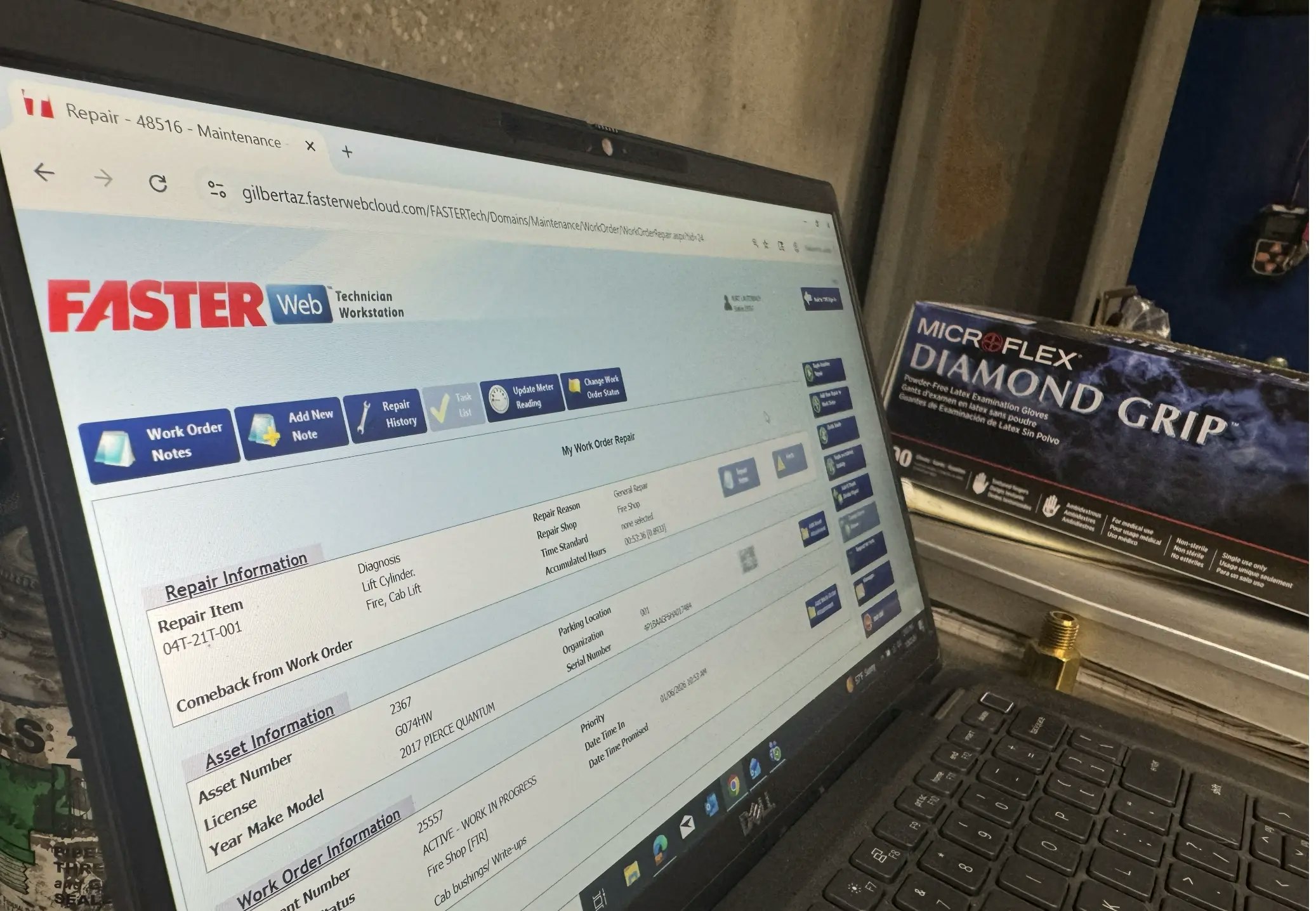
When Kim Hammon walks through the bays of the City of Franklin fleet shop today, she sees an operation defined by technical precision and data integrity.
Where there used to be a fog of manual tracking and tribal knowledge, there is now a streamlined, automated infrastructure that accounts for every bolt, every labor hour, and every asset in real-time.
As Fleet Manager overseeing a sprawling 971-asset portfolio, Hammon now commands visibility that spans 12 unique municipal departments.
She can monitor the exact maintenance lifecycle of high-demand fire apparatus and sanitation trucks, track the productivity of her technicians across every bay, and produce board-ready reports that justify million-dollar procurement decisions.
The transformation has redefined the department’s operational reality:
- Leadership trust is earned through verifiable data rather than anecdotal evidence.
- Asset replacement cycles are predictive, moving the city away from costly, reactive procurement.
- Technician workflows are optimized, ensuring every certified professional can focus on high-quality maintenance with far less administrative burden.
For Hammon, the most significant shift is the move from a reactive posture to a proactive command.
She is no longer just maintaining vehicles; she is managing a mission-critical data set that ensures the City of Franklin remains mission-ready, 24/7.
“It literally spells it all out for you. If you have a question, it's there. You don't have to guess. You don't have to go find a piece of paper. It’s right there,” Hammon says.
The Backstory: The Breaking Point of Legacy Tracking
This level of technical clarity began after suffering through years of systemic frustration.
Before the implementation of FASTER Asset Solutions, Hammon was leading one of the fastest-growing fleets in Tennessee with tools that were fundamentally incapable of scaling.
Franklin is a fast-growing suburb of Nashville that has seen its fleet expand alongside the city. Once a sleepy hamlet outside of Music City, Franklin has grown from about 13,000 residents in 1980 to more than 80,000 today,
The city’s fleet has evolved to meet the dynamic needs of a fast-growing community.
The primary culprit was a lack of comprehensive reporting.
In its legacy asset management environment, the department was flying blind.
Hammon identifies this reporting gap as the "number one factor" that threatened the fleet’s efficiency. Because information was siloed and manual, the department faced:
- The Burden of Proof: Justifying budgets to city leadership felt like an interrogation because the data was fragmented and difficult to compile.
- High-Demand Risk: Fire trucks and garbage trucks are the heartbeat of a city. Managing their specialized needs through manual logs created a constant risk of unplanned downtime.
- Administrative Fatigue: Staff spent hours on manual reconciliation, taking their focus away from actual fleet readiness and serving the citizens through the various departments.
"What are we not getting?" Hammon asked herself.
The answer was a lack of transparency into scheduled versus unscheduled repairs and the absence of a centralized "source of truth."
Beyond Franklin: How FASTER Elevates Municipal Fleets Nationwide
The City of Franklin’s transformation is not an isolated success story. It reflects a broader shift happening across municipal fleets that are choosing to modernize their operations with FASTER Asset Solutions.
For more than 40 years, FASTER has partnered with over 400 municipal, utility, public safety, and facilities organizations across North America. These fleets face many of the same pressures Franklin once did: increasing asset counts, rising maintenance costs, shrinking budgets, and growing demands for accountability.
What separates high-performing fleets from those constantly in reactive mode is not just technology — it’s visibility.
FASTER provides that visibility through a flat-fee, non-tiered platform that allows organizations to track unlimited assets without financial penalty for growth.
Whether a fleet manages 100 vehicles or 2,000, leaders gain centralized oversight of preventive maintenance, work orders, parts and inventory, warranty recovery, labor tracking, and lifecycle cost analysis.
For public safety fleets, uptime is mission-critical. Some vehicles are involved in life-saving activities like fire, police and EMS while others are essential to quality of life like snow plows, parks and recreation and street sweepers.
FASTER’s preventative maintenance automation, telematics integrations (including Geotab, Samsara, Motive, Verizon Connect, and Vestige), and fuel system integrations (WEX, FuelMaster, Voyager) allow fleet managers to eliminate manual data entry and shift toward predictive maintenance strategies.
For municipalities balancing ERP systems such as Oracle, SAP, Tyler, or Workday, FASTER integrates directly into existing financial environments, eliminating double entry and strengthening audit readiness.
The result is consistent across fleets:
- Clear, defensible replacement planning
- Data-backed budget justifications
- Reduced downtime costs
- Stronger compliance and inspection tracking
- Increased technician productivity through workflow standardization
Like Franklin, organizations that succeed with FASTER do more than install FMIS software.
They establish a data discipline. They align IT and operations. They create a culture where information replaces assumption.
The outcome is not simply improved maintenance tracking.
It’s operational command.
And in municipal fleet management, command is the difference between surviving budget cycles – and leading through them at Hammond demonstrates.

The Stakeholder Alliance: Bridging the IT Gap
Hammon recognized that a modern fleet requires a strategic partnership with the IT department – a relationship that is often a point of friction in municipal government.
To secure the green light for a new system, she invited IT to the table as a collaborator so they could own a shared new fleet asset and maintenance platform.
She took a consultative approach, asking IT a single question:
"What do you need this solution to do?"
By acknowledging the technical requirements of the IT team early, she converted potential resistance into a city-wide alliance.
This alignment was the catalyst that moved the project from a departmental "wish list" to a strategic priority for the City of Franklin.
The 18-Month Preparation: Prioritizing Data Integrity
While many organizations look for a "plug-and-play" fix, Hammon knew that the success of a new Fleet Management Information System (FMIS) depended entirely on the quality of the data.
She led a rigorous, 18-month data cleanup mission that began long before the contract was signed. "I can't stress that enough," Hammon warns.
"If you even think you're going to an FMI system, start your data cleanup."
To ensure a clean migration, Kim and her team focused on Asset Attributes (VINs, meter readings, and purchase dates), PM Schedules, and Parts Inventory.
Simultaneously, she focused on getting her team aligned.
For a year and a half, she ensured there were "no surprises" for her team.
By maintaining constant communication with technicians, office staff, and inventory managers, the transition became part of the department’s culture.
By the time they entered the sandbox testing phase, the data was pristine, and the staff was already mentally prepared for the new operational environment.
Operational Impact: Real-Time Visibility
Today, FASTER serves as the central hub for the City of Franklin.
Each city asset is tracked from the day of purchase until it departs the city’s ownership to track lifecycle costs. This comprehensive asset view allows city leaders to better understand their true costs associated with each department’s assets.
And FASTER’s inventory management provides the department improved accountability, ensuring that every piece and part is being tracked and applied appropriately.
Because the system was built to grow with their technology goals, the city has a clear path forward for full data unification without having to "rip and replace" their existing infrastructure. Franklin is currently laying the groundwork to integrate FASTER with their Fuel Management System and Telematics feeds. This planned automation will eventually allow meter readings to flow directly into FASTER and trigger Preventative Maintenance (PM) alerts automatically, removing the risk of manual entry errors and ensuring technicians never miss a critical service window.
The ability to manage the fleet in real-time has unlocked:
- Shop Transparency: Hammon can see exactly where a vehicle is in the repair process and monitor labor efficiency across the board.
- Strategic Scaling: Instead of overstaffing as a hedge against uncertainty, the city can align service levels with actual demand patterns.
- Consultative Success: By following a structured rollout guide and leaning on consultative support, Franklin avoided the typical pitfalls of large-scale software implementations.
For example, avoiding "data pollution." Most agencies rush implementation and end up with "Garbage In, Garbage Out." By following the FASTER rollout guide, Franklin ensured that their Total Cost of Ownership (TCO) reports were audit-ready from day one, rather than spending the first year fixing migration errors.
A Future Built on Clarity, Not Guesswork
Looking ahead, Hammon sees a fleet that is no longer a background utility, but a data-driven leader in the municipal space.
The days of clipboards and guesswork have been replaced by a system that, as she puts it, "basically spells everything out for you."
What once felt like a manual burden is now a managed, optimized operation.
The City of Franklin has successfully migrated from the limitations of legacy tracking into a future where every asset is accounted for, every budget is justified, and the fleet is always prepared to serve.